
Log of Bjeshke
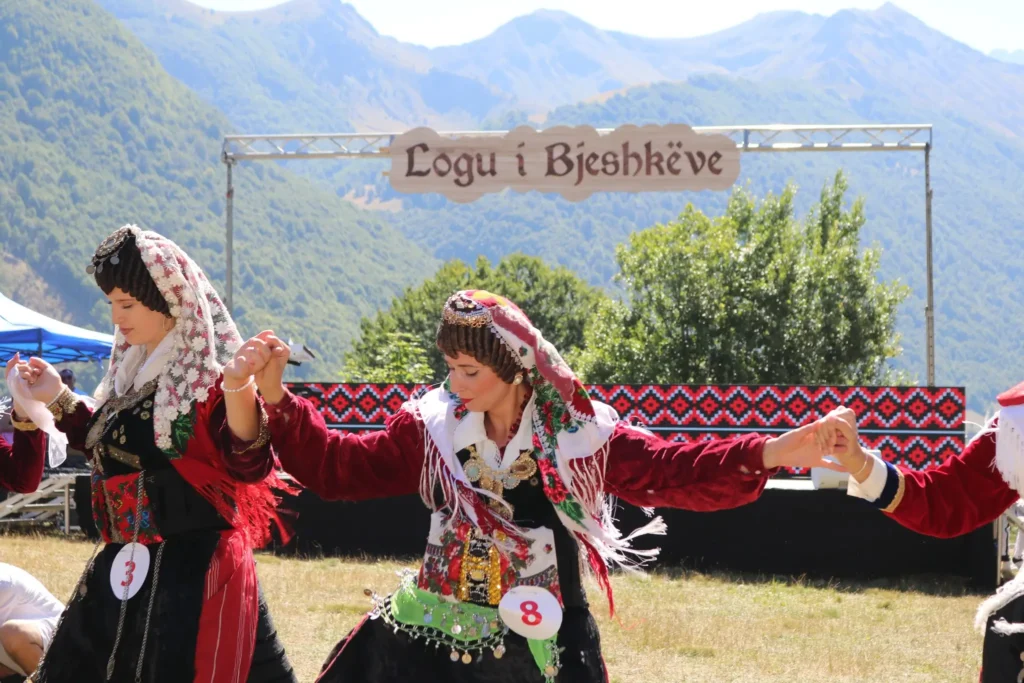
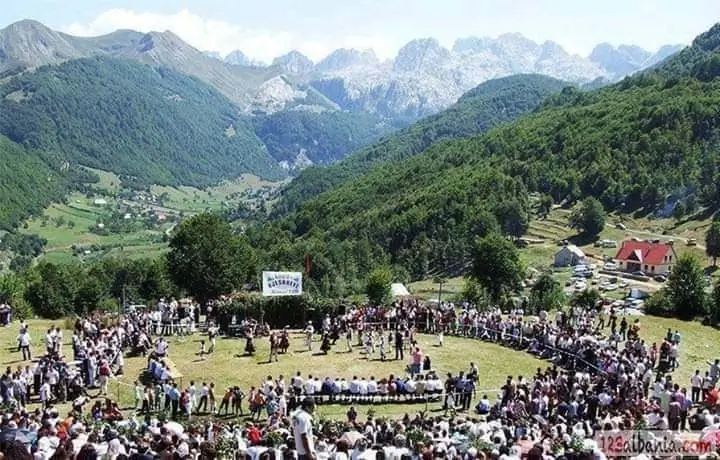
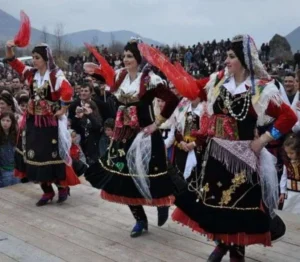
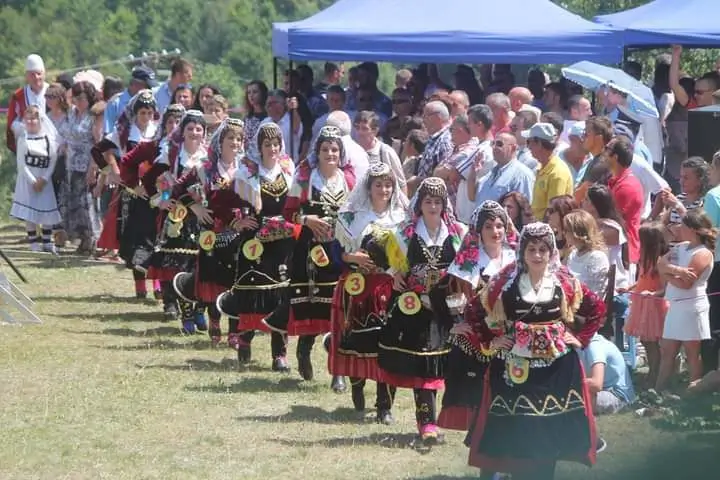
Logu i Bjeshkëve is an early celebration of the inhabitants of the Great Highlands. Originally known as the Church Log, it usually took place after mass. According to the statements of the community members themselves, at the end of the mass, the community members went out to the square/area in front of the church/cult object, while one of them gave the call, interpreted the majekrahi song, which served to draw the attention of the attendees towards girls who were dressed in xhubletë which as a rule had to pass in front of the church and be visible to all the participants so that the residents could determine the best among them. The mountain woman went to church always dressed in a xhubletë, choosing the best one she had, in cases where there were several of them. However, not all women could follow the protocol of passing in front of the church for the reason that this privilege was only allowed to girls who had a maximum of 1 year of marriage. The latter were distinct for the reason that, in addition to wearing xhubletë, they also wore kapicën. Besides the selection of the best among the new brides, the Logu contained a number of other fun activities, which were mainly carried out by men, such as horse racing, tug-of-war, swordplay, etc. As a rule, Logu could be held in any church. However, until our days, the Logu i Bjeshkëve developed in the Predelec Pass has survived. This annual activity was revived in 1998, by the “Jehona e Kelmendit” association, and since then it has been held every year, without interruption, usually between August 8-12. Its location has a historical character due to the fact that at Qafa e Predelec there was a Church/cult object, in which mass was held, while then the logo was developed with the characteristics we mentioned above. In the early tradition of the Log in the Predelec Pass, only girls who were married in the year the Log was held and belonged to the area around Selce, Tamare, Broje, Vukël, etc. had the right to participate. In today’s practice of Logu i Bjeshkëve, this tradition of participation has been transformed and adapted both in terms of the age of the participants, from the age of 15 to married women with children, as well as in terms of geographical extent. Nowadays, clearly, due to demographic changes, women who live in different areas of the Republic of Albania and even abroad participate.